DIGESTIVE SYSTEM
By the end of the lesson the students should be able to
1. State the types of alimentary canals.
2. Describe the functions of the various
parts.
3.State the modifications of their parts
to effect their digestive functions.

Digestive system
Meaning: This involves all the organs and glands or alimentary tract associated with digestion and assimilation of foods in animals.
Digestion can be referred to as the process by which large molecules of food is broken down into simpler forms absorbable by animals.
Alimentary canals or tract differs in animals in terms of complexity, size, mode of feeding and diet.
Types of Alimentary Tracts of Some
Animals
The alimentary canals or tracts of animals varies in organisms usually from unicellular or lower organisms to multicellular organisms.
1. PLANARIA: these are free living flatworms that feeds on smaller aquatic organisms referred to as zooplanktons.
The mouth opens into a buccal cavity which leads to the pharynx. It's digestion is intracellular. The branched intestine allows digested foods to diffuse to all parts of the body. the pumping action of pharynx sucks in pieces of food which enters the pharynx and passes it into the small intestine.
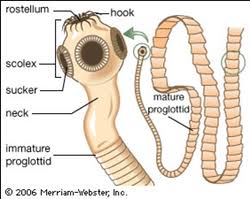
2. TAPEWORM: It is found in the intestine of some mammals as endoparasites. It absorbs digested food from it's host by simple diffusion.there is absence of alimentary canal in tapeworm.
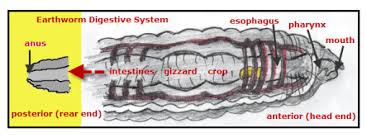
3. EARTHWORM: It comprises of two openings at the mouth and anus, the anus is the region through which ingested food leaves the body, the alimentary tracts are the mouth, pharynx, oesophagus, crop, gizzard, intestine, caecum, rectum and anus.
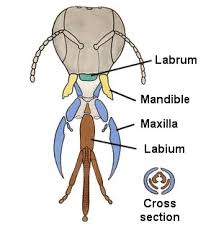
4. GRASSHOPPER AND COCKROACHES: Grasshoppers feeds on green vegetables while cockroaches feeds on household materials like books, food, sugar etc. Their alimentary canals includes, mouth, oesophagus, salivary glands, oesophagus, crop, gizzard, midgut, caecum, ileum, rectum, hind gut, malphighian tubules and anus.
Digestion of food In Man and Alimentary Canal.
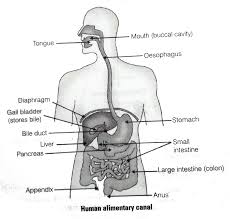
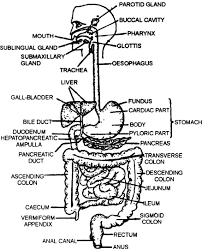
Mouth: this primarily consists of teeth, salivary glands and tongue. The teeth is used to cut, grind or chew foods into tiny particles, and exposes large areas of food for the action of enzymes.
Salivary glands secretes saliva which contains ptyalin.
Ptyalin breaks down starch into maltose.
Oesophagus: these allows food movement by peristalsis.
Stomach: food is stored here. Gastric glands contains gastric juice which secrets renin and pepsin.
Renin acts on milk while pepsin breaks down proteins and polypeptides.
Duodenum: food digestion takes place in this region of alimentary Canal. The duodenum contains Pancreas that secretes pancreatic juice. Which contains the following enzymes such as (i) Amylase -- that converts starch to maltose. (ii) Lipase that converts fats and oils to fatty acid and glycerol.
(iii) Trypsin: Converts protein and peptones to polypeptides.
Small Intestine: or ileum is found between the duodenum and large intestine.
Classwork
1. State the alimentary tracts used for
digestion in humans.
2. Differentiate between Digestive
system and circulatory system.
Assignment
1. Explain the following mechanisms
and give two examples each of
organism that exhibits each
mechanism.
(i) Absorption mechanism
(ii) Biting and chewing mechanism
(iii) Sucking mechanism
(iv) Grinding mechanism.